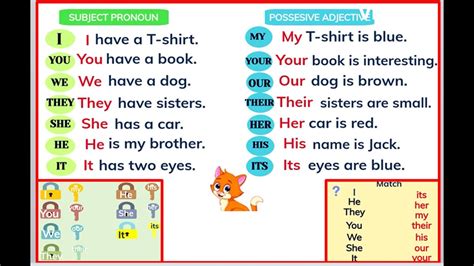
There are two types: possessive pronouns and possessive determiners. We use possessive determiners before a noun. We use possessive pronouns in place of a noun: Is that [determiner] your scarf? It’s very similar to [pronoun] mine. (It’s very similar to my scarf.) That’s not [determiner] their house. [pronoun] Theirs has got a red front door.
Our vs their: mastering possessive adjectives
Your vs our vs their: clear examples and explanations
Learn the difference between "our" and "your" with clear examples and explanations. Understand their usage and improve your grammar skills now.
Your vs their: confusing possessive pronouns explained
How to remember when to use your, our, and their
This step-by-step learning plan will show you exactly how to master possessive determiners like my, your, his, her, its, our, and their —with examples, charts, and practical tools to help you remember them for good.
Common mistakes with your, our, and their: what to avoid
Learn to fix 10 common mistakes with possessive determiners in English. Based on Udemy’s best-selling English Course, this guide improves grammar and fluency.
Grammar rules: when to use your, our, and their correctly
Possessive determiners like my, your, his, her, its, our, and their may seem simple, but using them correctly can make a big difference—especially when switching between casual and professional English. Notice: In contrast to some other languages, (such as German, for example) in English, possessive pronouns are not inflected, which means that their form never changes whatever noun is referred to. Now, take a look at the rules of use and the two tables that display the forms.